

Seconds, not minutes: Thai Airways’ leap in baggage handling
 Share
Share


For more than 60 years, Thai Airways International has been a proud symbol of Thailand’s national identity and global connection. Carrying more than 16 million passengers every year, it is the gateway for travelers into and out of the country.
But as air travel rebounded after the pandemic, baggage handling quickly became a critical pressure point. Delays in processing bags were no longer just an operational hiccup — they risked damaging customer trust, slowing down a busy hub like Bangkok, and putting additional strain on staff. For an airline built on excellence and service, this challenge mattered far beyond the back office.
The Challenge

Thai Airways’ baggage processes were still largely manual, taking up to three minutes to reflight a single bag. With traffic climbing quickly, those delays created long queues, anxious passengers, and mounting stress on staff.
The Solution

Thai Airways partnered with SITA to roll out SITA Bag Manager and SITA WorldTracer® Auto Reflight across its busiest stations, cutting a three-minute manual task down to just one second per bag.
The Results

Minutes became seconds, errors dropped, and passengers enjoyed quicker reunions with their bags.
The Challenge
At several domestic stations, except Bangkok Suvarnabhumi Airport, baggage reconciliation was still managed with paper “bingo sheets.” Arrivals and onward connections were handled manually, while staff had to scan, validate, print, and attach paper rush tags for every mishandled bag. This manual approach also made it difficult to meet IATA Resolution 753 requirements for full baggage tracking.
As passenger volumes returned to pre-pandemic levels, the cracks widened. The manual effort required to reflight high numbers of bags left staff stretched thin, while Lost and Found counters became overwhelmed. Passengers transferring through Bangkok grew frustrated with delays, and the airline faced mounting claims and compensation costs. What was once a routine back-end process had become a visible and costly challenge.
The Solution
Thai Airways has implemented SITA Bag Manager across its major domestic stations in Thailand, including Bangkok, Chiang Mai, Chiang Rai, Hat Yai, Ubon Ratchathani, Udon Thani, Khon Kaen, Krabi, and Phuket. With SITA Bag Manager, baggage reconciliation has transitioned from paper-based lists to a fully automated digital process.
At Bangkok’s main station (BKK), SITA WorldTracer® Auto Reflight was introduced to automatically validate passenger and flight data, efficiently reassign mishandled or missed bags to onward flights, and completely eliminate the need for paper rush tags.
The dashboard allows staff to monitor baggage movements in real time, while automation enhances cross-team coordination. What once relied on repetitive manual work has transformed into a streamlined, technology-driven process that employees have quickly embraced.
The Results
The transformation was immediate and measurable. SITA WorldTracer® Auto Reflight reduced a three-minute task to just one second per bag, saving hours of staff time every day. Lost baggage events were managed faster, queues at counters eased, and passengers noticed smoother connections.
The benefits extended beyond speed. By eliminating paper rush tags, Thai Airways reduced waste and gained a sustainability boost. The system also recorded the reason for each delay, giving the airline unprecedented visibility into mishandling trends and costs. This transparency improved accountability, decision-making, and financial efficiency.
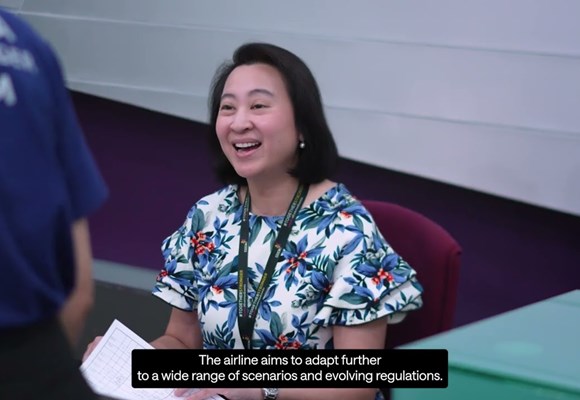
“SITA Bag Manager and SITA WorldTracer® Auto Reflight were intuitive and easy to adopt, and they immediately reduced our manual workload,” said Phuttaporn Thamtam, Team Lead for Baggage Services at Thai Airways. “The real-time dashboards gave us greater accuracy and made coordination between teams much smoother. And because of that, our passengers felt the difference almost immediately.”
Looking Ahead:
Encouraged by these results, Thai Airways plans to expand its use of SITA’s baggage solutions further. Projects are underway to roll out SITA Bag Journey NetScan, extending visibility beyond the airport environment, and to adopt these tools at international stations. The airline is also exploring opportunities to support other carriers at Bangkok and across its network with the same advanced systems.
For Thai Airways, this is more than a fix. It is a future-focused step toward building resilience, raising passenger confidence, and ensuring that the national carrier continues to set the standard for service and reliability.
About Thai Airways
Founded in 1960, Thai Airways International is the national carrier of Thailand. Operating from its hub at Bangkok’s Suvarnabhumi Airport, the airline serves millions of passengers annually and connects Thailand to key destinations worldwide. Known for its service excellence and technical expertise, Thai Airways plays a vital role in national connectivity, economic development, and global tourism.