


Peru sets new Latin American standard with automated border control at Lima
- Press Release
- Location: Geneva
- 16 Dec, 2025
 Share
Share


In a region where passenger volumes are soaring and borders are under increasing pressure, Peru is taking bold steps to lead the way. With the launch of a fully automated immigration system at the new terminal of Lima’s Jorge Chávez International Airport, Peru, is setting a new benchmark, in partnership with SITA, for fast, secure, and seamless border crossings in Latin America.
SITA was selected as the technology provider following an international tender conducted by the International Civil Aviation Organization (ICAO). The system was implemented by the National Superintendency of Migration (Migraciones) and SITA to handle Peru’s rapidly growing travel demand, which is soon expected to reach 40 million passengers annually. By combining advanced technology with smarter workflows and conventional immigration control methods, the new solution strengthens border security, improves operational efficiency, and makes the passenger experience faster and smoother.
What’s changing for travelers?
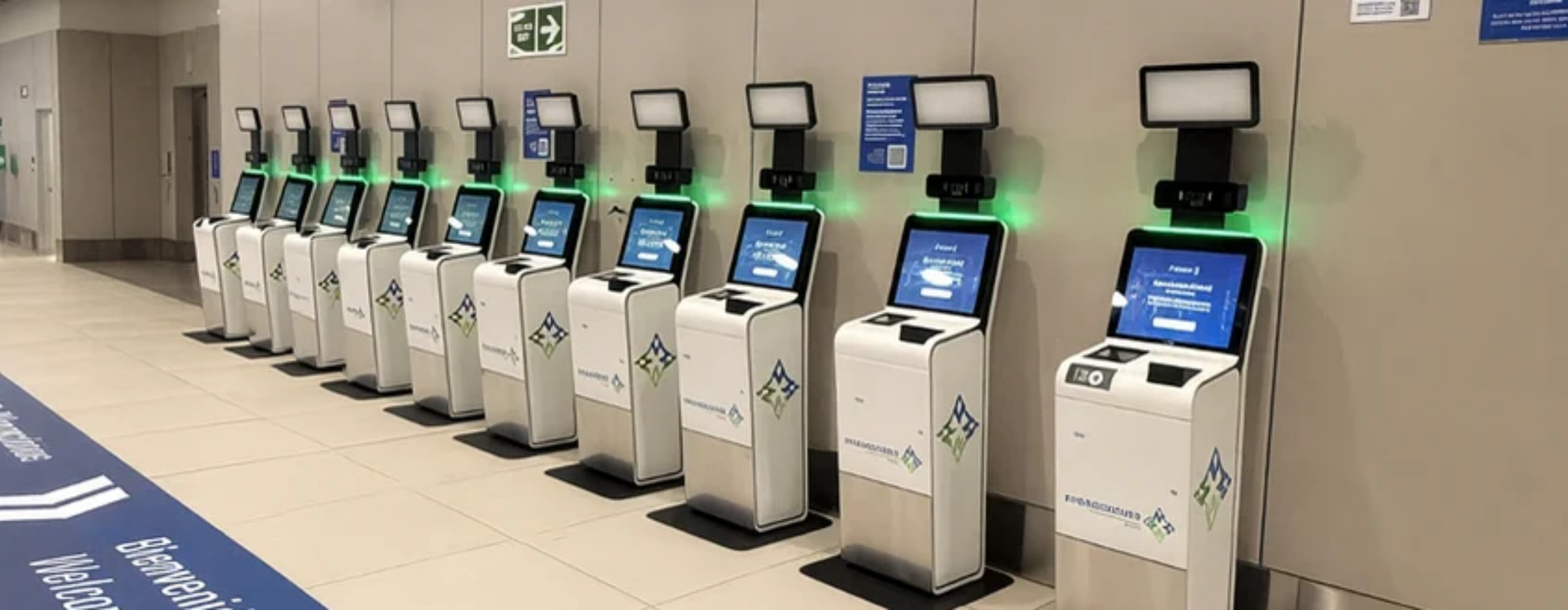
The project includes 19 Automated Border Control (ABC) eGates, 21 self-service kiosks, management consoles, a new mobile app for pre-travel declarations, and a comprehensive supervision and monitoring system. The mobile app will allow travelers to complete declarations ahead of time, aiming to reduce airport wait times by up to 50%.
Why it matters for Peru and the region
Beyond shorter lines, the new system strengthens Peru’s national security by allowing consistent application of immigration policies while improving the detection of potential risks. It aligns with ICAO standards, boosting Peru’s growing reputation as a trusted regional hub. Automating routine tasks also frees up immigration officers to focus on complex cases, helping manage resources more effectively during busy periods.
“The implementation of this modern immigration control infrastructure represents a milestone in the digital transformation of the Peruvian State,” said Armando Benjamín García Chunga, National Superintendent of Migrations of Peru. “Thanks to the partnership with SITA, we can now offer travelers a more agile, secure, and efficient experience, in line with the highest international standards. This advancement allows us to optimize biometric passenger identification at the new airport, while reinforcing our commitment to modern immigration management that puts the citizen at the center and establishes Peru as a regional leader in border innovation.”
A collaborative path to innovation
Since the contract was signed in August 2024, SITA has worked closely with Migraciones, Lima Airport Partners (LAP), ICAO, and other key stakeholders to deliver the project, integrating multiple systems within a complex technical environment. The result is a scalable, future-ready solution that positions Peru to adopt emerging innovations like Digital Travel Credentials (DTCs). The implementation was initially carried out only for Peruvian passengers and will soon be available to all airport users.
“Across Latin America and beyond, governments are under growing pressure to handle rising passenger numbers while maintaining strong security and delivering a better experience for travelers,” said Pedro Alves, SVP of Borders at SITA. “This is more than a technology upgrade: it’s a complete rethink of how border control can work. By adopting this automation, Peru is setting a powerful example for how innovation can help solve these challenges. We’re committed to supporting countries such as Peru in creating a smarter, more connected, and future-ready border.”
Looking ahead
Peru’s investment in innovative border solutions comes at a time when Latin America is emerging as one of the fastest-growing travel regions in the world. With this milestone, Peru is not only modernizing its own border operations but also paving the way for wider adoption of automation and digital innovation across the region, setting a new standard for how airports and governments can work together to create smarter, safer, and more passenger-friendly borders.