


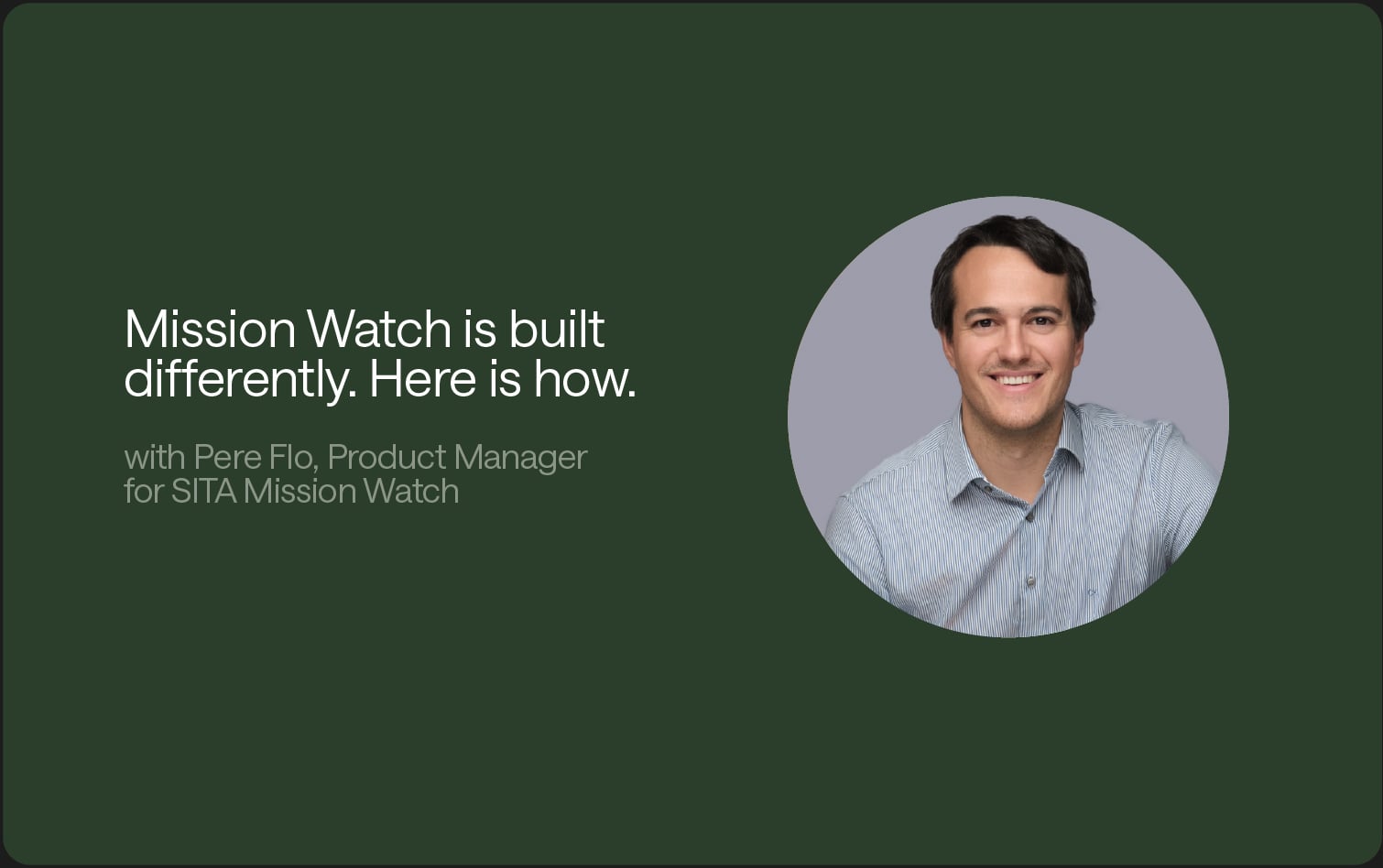
Great technology isn't enough on its own. Pere Flo, our Product Manager, explains why decades of real OCC experience sit behind every decision we build into SITA Mission Watch.
Customer Centricity In Action
Insight-driven, continuous improvements
0
OCC visited since 2023
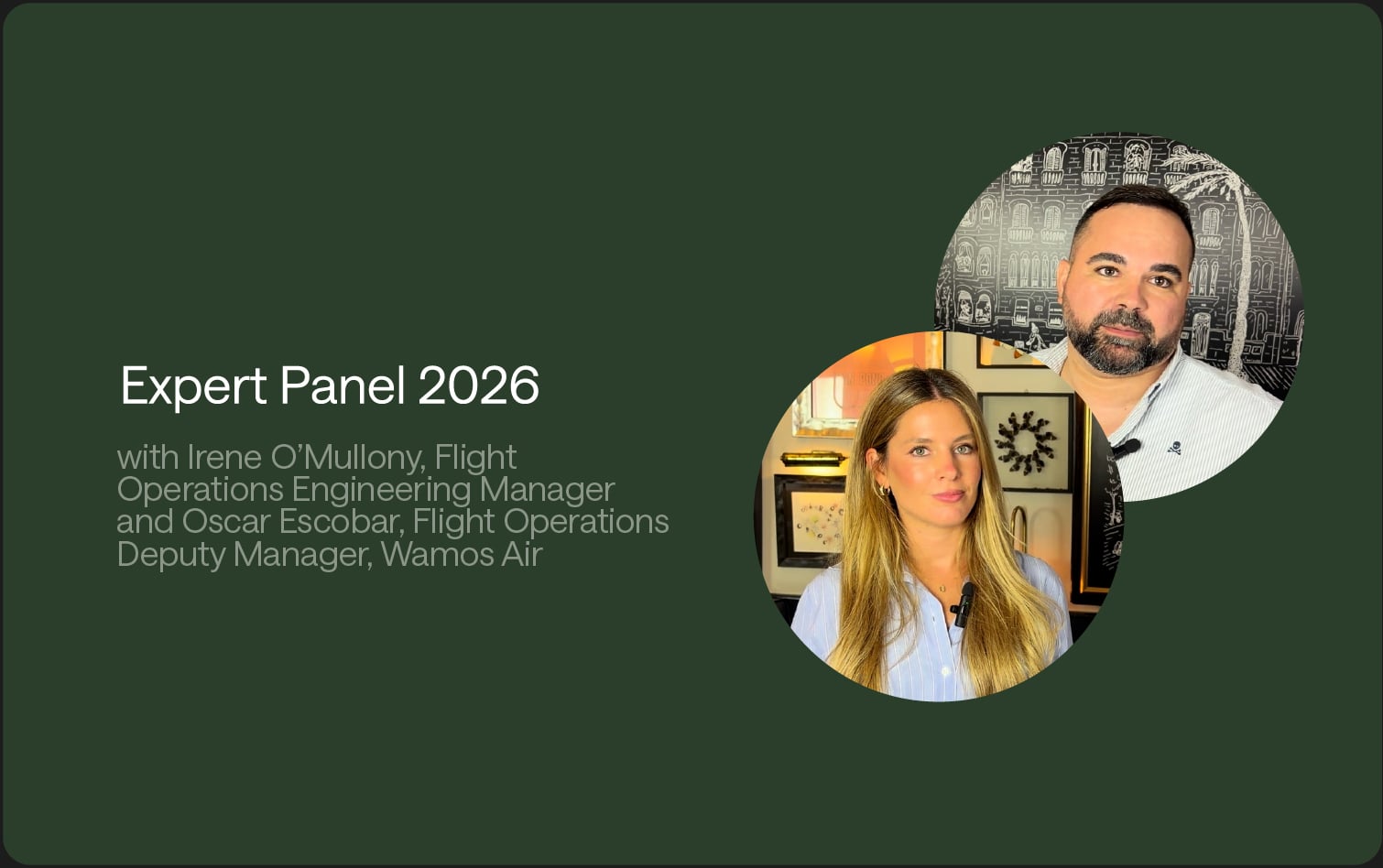
Built with airlines: how our annual Expert Panel turns OCC experience into product decisions
Once a year, airline operations teams, dispatchers, and OCC leaders sit down with the SITA Mission Watch team to share what's working, what isn't, and what they need next. This is not a feedback form. It is a working session where real client experiences directly influence the SITA Mission Watch roadmap. Here is what the airline community is telling us.


The team behind SITA Mission Watch: aviation expertise meets product innovation
I am Pere, Product Manager for SITA Mission Watch. I work with airlines, dispatchers, and our internal team to shape what SITA Mission Watch becomes next: what we build, in what order, and why. My role involves identifying opportunities, prioritizing investments, and delivering solutions that improve operational value for airlines.

Pere Flo
Product Lead, SITA Mission WatchI lead the Apps and Data Portfolio at SITA for Aircraft, which means I am responsible for the strategy and direction of SITA Mission Watch and the products around it. My focus is on making sure SITA Mission Watch fits into the bigger picture of how airlines use data to make better decisions, across the cockpit, the operations control center, and everything in between.

Albert Dominguez
Head of Apps and Data Portfolio, SITA for AircraftI am Daniele, Product Owner for SITA Mission Watch. My job is to take what airlines actually need on the operations floor and work with our engineering and design teams to turn that into something real and useful. I have been building aviation technology products for more than a decade, and before that I studied Aerospace Engineering so aviation has never just been a job for me.
I enjoy collaborating with people from different backgrounds and cultures, solving complex challenges together, and continuously learning something new along the way.

Daniele Baldon
Product Owner, SITA Mission WatchI'm a flight operations expert and Mission Watch specialist supporting the Product team. With 8 years in airline operations control and performance engineering, I help bridge the gap between product development and real-world operations, making sure our solutions meet the needs of the people who use them every day.

Carlos Morante Gomez
Senior Product Specialist, SITA Mission WatchI am Marti, Senior Product Specialist for SITA Mission Watch. I look after the modules that take SITA Mission Watch beyond core flight tracking: things like the Dispatcher Simulator, Replay Mode, and the Communications Module. I work with airlines to understand what they need, then help turn those ideas into products they can actually use.

Marti Esteve
Senior Product Specialist, SITA Mission WatchDispatcher Hub FAQ
Airlines using Mission Watch report consistent operational improvements across their OCCs, including a consolidated flight-watch view, faster dispatcher-pilot communication, and one carrier measuring dispatcher messages answered within five minutes rising from 65% to 85% after adoption. Mission Watch is used across the industry, from full-service carriers to low-cost airlines and from mega-fleet operators to small regional carriers, reflecting a common need: giving dispatchers a single, modern view of their operations rather than a patchwork of screens.
Mission Watch streamlines the dispatcher workflow by consolidating the day-of-operations flight-watch journey into one application. Instead of switching between separate tools for tracking, weather, airport status, and communication, dispatchers work from a single situational-awareness interface with most tasks reachable in three clicks or fewer. A manage-by-exception alert engine surfaces only what needs attention, so nothing on the OCC floor competes for focus unnecessarily. Dispatchers spend less effort cross-checking and more on the calls that matter.
Mission Watch manages the full IROP sequence from a single application, giving dispatchers real-time weather evolution, alternative routing tools, and direct pilot communication without switching screens. When a flight faces a developing weather hazard near its destination, the dispatcher sees it evolve, pre-plans an alternative route, and updates the pilot via ACARS before departure. In flight, alerts flag developing hazards automatically. Airport suitability, NOTAMs, and alternate airport status are all on hand if a diversion is needed.
Mission Watch is designed to sit within an airline's existing OCC technology stack, not replace it. It occupies the flight-watch and monitoring layer of the flight operations software landscape and integrates with the systems around it, ingesting multiple position sources (terrestrial and space-based ADS-B, ACARS, ADS-C) and the airline's operational flight plans.
For integration, it layers cleanly on top of whatever flight planning engine the airline already runs. Dispatchers pre-plan reroutes in Mission Watch, then push updates back to the planning system.
Most airline dispatchers are trained and operational on Mission Watch within one week of implementation, with an interface built around situational awareness, so the learning curve matches the time pressure of the OCC floor.
The interface uses a modern 4D view, color-coded alerts, and most tasks within three clicks, so dispatchers new to the system generally find it intuitive. A Dispatch Simulator coming soon will let new dispatchers practice against real historical scenarios inside the same environment they use live.
Airlines moving to Mission Watch typically leave behind a combination of legacy flight trackers, separate weather tools, and manual ACARS communication workflows, replacing several fragmented applications with a single flight-watch environment. Mission Watch brings every layer of the dispatcher's flight-watch journey together in one place: flight tracking, weather, and dispatcher-pilot communication, so the operational visibility a dispatcher needs lives on a single screen rather than across several.
The direction of Mission Watch comes from the OCC floor. The team behind the product blends software specialists with former dispatchers and ops-control professionals, so the dispatcher experience is built in from the start rather than added later. That insight is kept current by sitting with dispatchers in OCCs to watch how Mission Watch fits their real workflow. Airlines shape the product roadmap formally through an Expert Panel that convenes once a year, giving flight operations decisions a direct line back to the people who rely on them every shift.