


Aviation needs more Sustainable Aviation Fuel. Fast. Supply is still limited, costs remain high, and the gap between SAF production and SAF demand is becoming harder to ignore. Airlines are already investing in SAF to meet regulatory and industry commitments, but they cannot fund the transition alone. Corporate customers want to help, especially on business travel and air freight emissions. The problem is that current carbon accounting frameworks do not consistently recognize SAF certificates as a credible way to abate emissions. That weakens demand, blunts investment signals, and slows the scale-up aviation needs. The Greenhouse Gas Protocol’s Actions and Market Instruments work could change that. If SAF certificates are recognized under a clear, high-integrity framework, airlines and their customers could work together to accelerate climate action now.
In brief
- SAF is widely seen as the most effective near- and medium-term lever to cut aviation lifecycle emissions, but supply remains scarce and expensive.
- Airlines are investing in SAF, often under mandates, yet they cannot absorb the transition costs alone.
- Corporate customers increasingly want to support SAF through the purchase of certificates, allowing them to abate business travel and logistics emissions.
- Today’s carbon accounting rules do not consistently recognize SAF certificates in a meaningful, standardized way.
- The GHG Protocol’s Actions and Market Instruments proposal could create a clearer reporting home for SAF certificates while preserving accounting integrity.
SITA supports the AMI direction and encourages the GHG Protocol to develop clear, robust guidance for SAF certificates.
Why aviation’s SAF gap matters now
SAF is widely regarded as the most effective near- and medium-term lever to reduce aviation lifecycle emissions. Airlines are adopting it where available, but the price premium is substantial and supply remains constrained. Corporations, meanwhile, increasingly seek ways to address aviation-related emissions in their value chains, particularly in Scope 3, through credible mechanisms that go beyond simply reducing what they directly control.
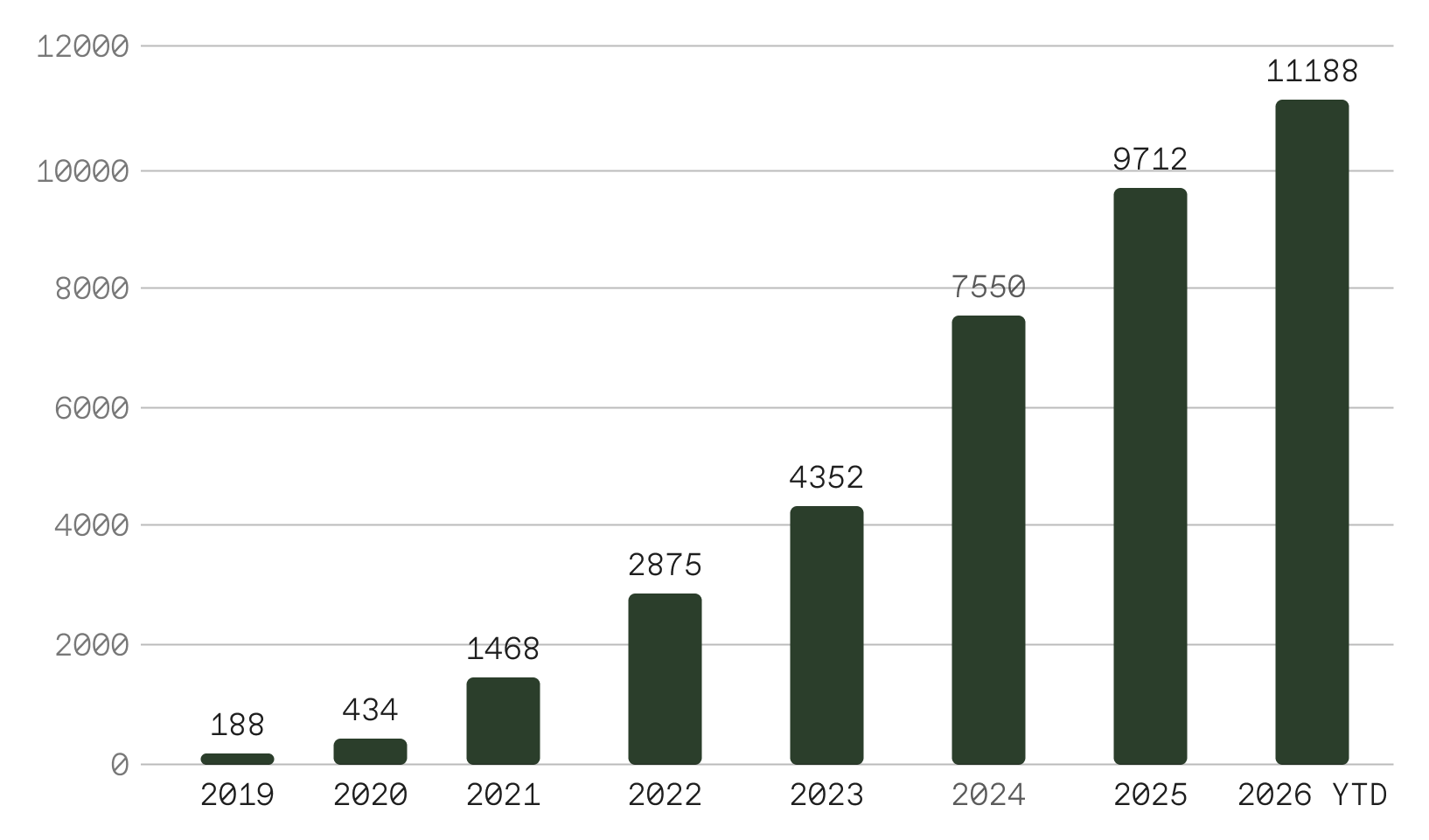
Number of companies with SBTi Net Zero commitment
Yet the accounting system most commonly used for corporate reporting was built around a physical emissions inventory approach, attributing emissions based on direct operational control or value-chain relationships. While this approach ensures integrity, it does not capture the growing role of market-based interventions, where companies influence emissions beyond their immediate operational boundaries.
Why current carbon accounting rules are holding SAF back
This leads to a practical disconnect: airlines can physically use SAF, and corporates can help finance SAF through certificates, but corporates cannot reflect that contribution in their reported emissions in a meaningful, standardized way. When contributions are not recognized, corporate demand remains limited. When demand remains limited, the investment signal for SAF production remains weaker than it needs to be. The net effect is slower decarbonization.
At the moment, purchasing SAF to comply with legal mandates constitutes a net cost for airlines, as SAF is three to four times more expensive than fossil aviation fuel. SAF certificates are a means for airlines to monetize these mandated purchases by selling the SAF onwards to willing corporate buyers, helping to spread the overall financial burden of aviation decarbonization.
Trajectory of SAF production volumes against demand
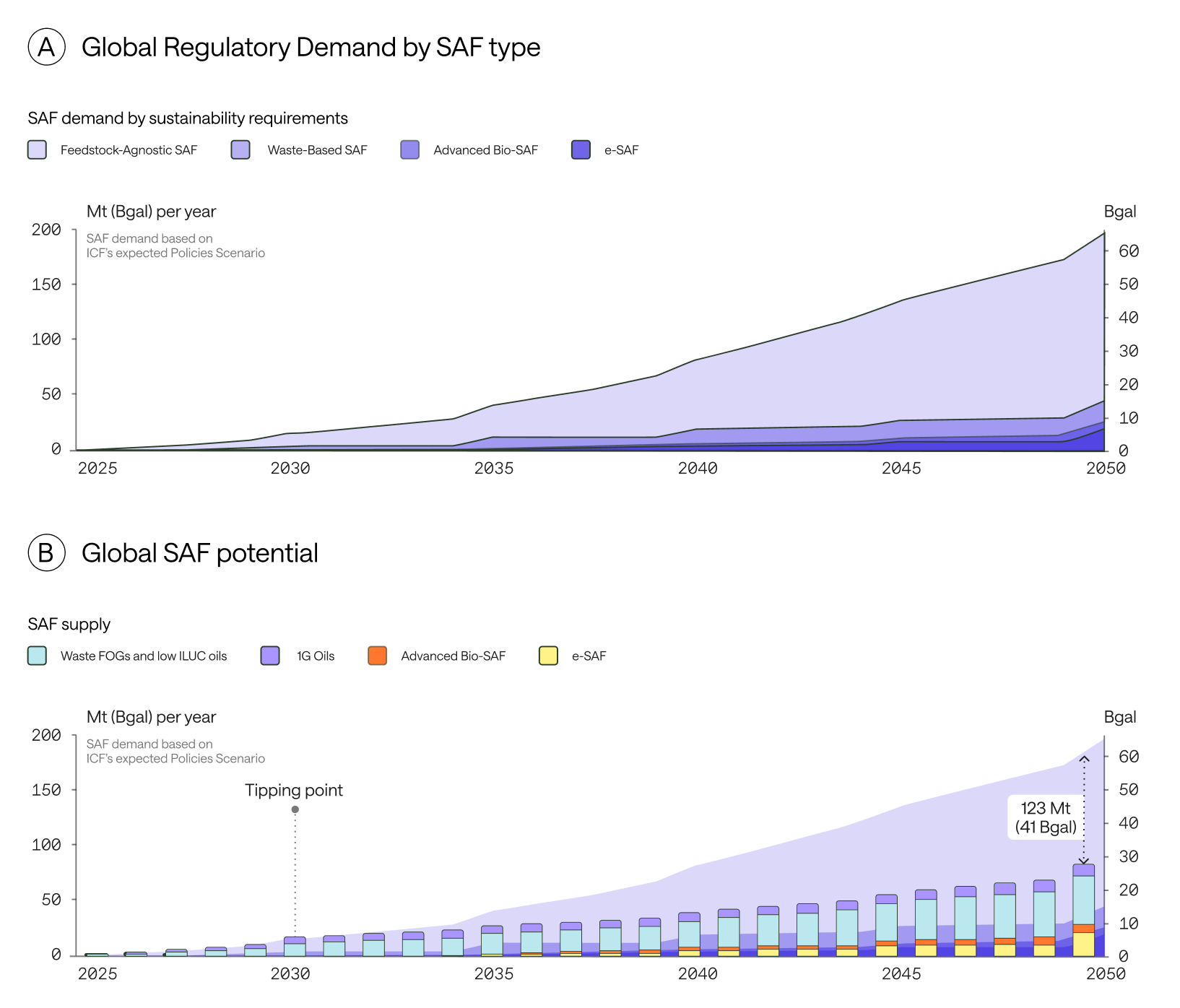
This slow roll-out of SAF is not because of missing passenger interest in low-emission air travel, on the contrary: the most recent SITA Passenger IT Insights report found that nearly 9 in 10 travelers say they’re willing to pay to reduce their carbon footprint.
How could the GHG Protocol’s AMI proposal change the picture? A turning point
The GHG Protocol AMI White Paper responds directly to this challenge by proposing a multi-statement reporting structure that would supplement the traditional physical inventory rather than replace it. This is an important conceptual shift: it acknowledges that organizations influence emissions not only through what they physically emit or consume, but also through procurement choices, contractual arrangements, and actions taken within and beyond their value chains.
The White Paper outlines four complementary statements: a physical GHG inventory (unchanged), plus new statements to disclose market-based inventories, impact reporting, and non-GHG indicators. Critically, the proposal emphasizes clear separation among statements to maintain the integrity of the physical inventory and avoid inappropriate netting while still enabling transparent reporting of market instruments and actions that influence decarbonization outcomes.
For aviation, this matters because it would create a credible approach for the reporting of instruments like SAF certificates, for the benefit of SAF producers, airlines and their customers.
SAF certificates: bridging supply, demand, and accountability
SAFc are a practical mechanism to connect the physical use of SAF by airlines with the financial support of corporate customers. They reflect the environmental attributes of SAF, typically lower lifecycle emissions compared to conventional jet fuel, and can be transferred to a buyer through a contractual instrument, often supported by registries and chain-of-custody models.
This model is particularly important in aviation, where fuel supply chains are shared and physical traceability between producer, airline, and end user is often impractical. The AMI framework explicitly recognizes that contractual traceability models, including mass balance and book-and-claim, can play a role in market-based accounting when appropriate safeguards are in place.
Under the proposed AMI architecture, SAF certificates can be recognized in two complementary ways:
First, within a market-based GHG inventory, companies could report aviation-related emissions using supplier-specific or certificate-backed emissions factors tied to contractual SAF attributes. This is particularly relevant to corporate reporting needs for business travel and logistics, where the physical SAF may not be uplifted on the specific flight taken, yet the purchase is designed to drive decarbonization within the aviation fuel system. The White Paper explicitly references low-carbon fuel certificates as potential instruments for inclusion in a market-based inventory, subject to eligibility criteria and safeguards defined in Phase 2.
Second, within a GHG impact statement, companies could report the consequential climate impact of enabling SAF deployment, particularly when the intent is to make a broader climate contribution rather than adjust an inventory figure. The White Paper describes this statement as using consequential methods to quantify impacts relative to a credible baseline scenario and to disclose mitigation impacts transparently, separate from attributional inventory statements.
Taken together, these pathways would help align reporting with real-world decarbonization dynamics in aviation while preserving accounting integrity.
What makes SAF certificates credible
Recognizing SAF certificates in corporate reporting must come with strong integrity protections. Without safeguards, the risk is confusion, inconsistent claims, or double counting – outcomes that would undermine both corporate reporting and confidence in SAF as a climate solution.
At minimum, any GHG Protocol-recognized SAF certificate approach should ensure:
- No double claiming, with clear rules on who holds which environmental claim when SAF attributes are transferred.
- Robust traceability and registry controls, including unique issuance, tracking, and retirement/cancellation so that a certificate cannot be claimed more than once.
- Credible lifecycle quantification, using transparent, consistent methodologies for SAF pathway emissions and a clear fossil baseline.
- Clear claim language, distinguishing between inventory-adjustment claims (market-based) and broader climate-impact or contribution claims (consequential).
These expectations are consistent with the White Paper’s emphasis on transparency, completeness, accuracy, and the avoidance of biased reporting and double counting across statements.
Why this matters for SAF scale-up
Modernizing carbon accounting to recognize SAF certificates is not simply a technical improvement; it is a market enabler. When corporate buyers can report SAF-related action in a credible, standardized way, they are more likely to participate and to scale their participation over time. That increases demand, strengthens the business case for SAF projects, and can help reduce the cost premium as supply grows.
For airlines, this is equally important. Airlines face rising compliance obligations and significant cost exposure as SAF mandates expand. Mechanisms that allow airlines to share SAF costs with corporate customers without compromising the integrity of emissions reporting can accelerate adoption while supporting financial resilience.
The opportunity ahead
The GHG Protocol AMI initiative represents a pivotal moment for corporate emissions reporting. A multi-statement approach can preserve the strengths of physical inventories while adding the transparency and structure needed to recognize credible market instruments, especially in hard-to-abate sectors.
For aviation, getting this right is essential. SAF is expected to remain a cornerstone of the industry’s transition for decades, but scaling it requires broader participation than airlines alone. Corporate demand channeled through high-integrity SAF certificates can be a meaningful accelerator, provided that reporting standards support clarity, integrity, and comparability.
SITA urges the GHG Protocol to develop clear guidance for SAF certificates within the emerging AMI framework. Creating a market-based inventory for Scope 3 emissions and setting official guidelines for SAF certificates will help sustainable aviation fuel reach its full potential as a true driver of climate action.
FAQ - SAF certificates


